We believe that a family’s progress is assured when its child’s learning is assured.
Family's Learning Assurance System @ Home™
A transformative course to make your child's learning visible, measurable and assured – right at your home.
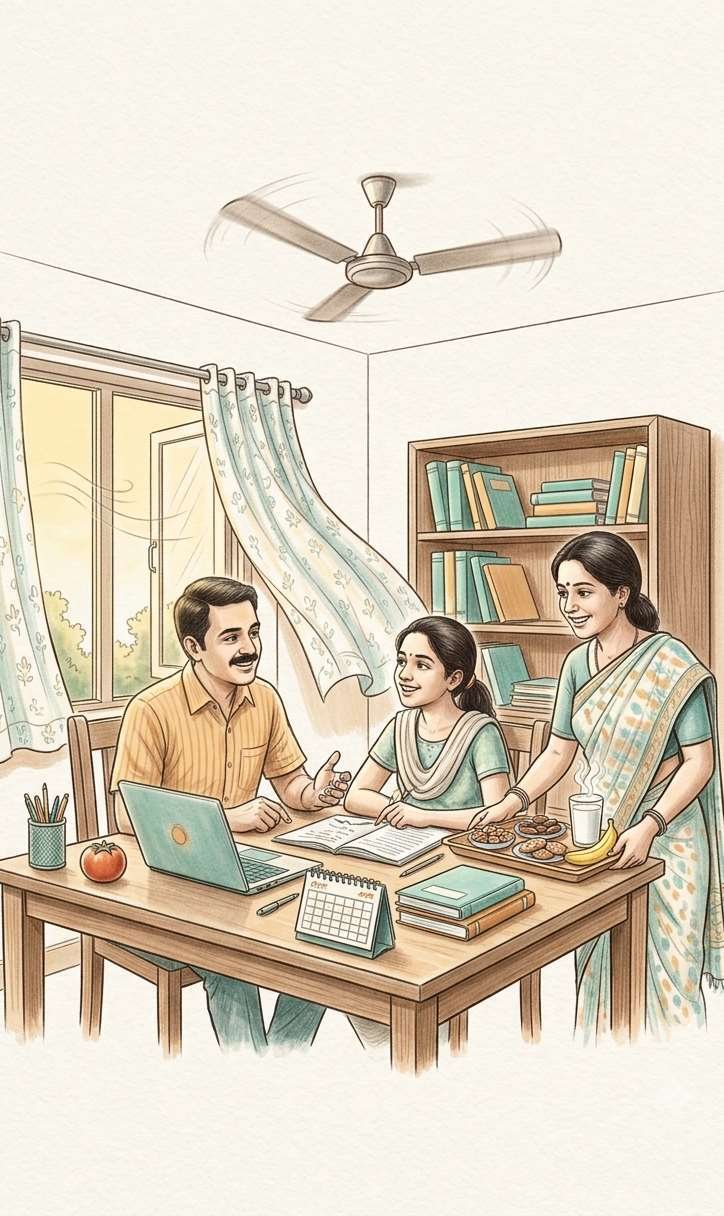
We believe that a family’s progress is assured when its child’s learning is assured.
By making learning visible, measurable and assured.
FLASH: an online course of 6 sessions × 2 hours for parents and children, with a 100% money-back assurance.
Children are expected to absorb, understand, apply, analyze and evaluate, often without the principles of learning itself.
Children build their own learning methods. They may or may not work.
Each year builds on the last, so small gaps compound over time.
Rote memorization and reduced confidence.
Marks that don’t reflect effort, or well-being and childhood happiness given up for grades. Both lead to stress and disengagement.
Quality schools, resources and coaching
Meaningful learning outcomes
Parents themselves may not have received guidance on the science of learning.
Learn for mastery
Learn for marks
Strong learning outcomes must start from high school classes. Without them, higher secondary outcomes slip away, and so does the chance of mastery and marks.
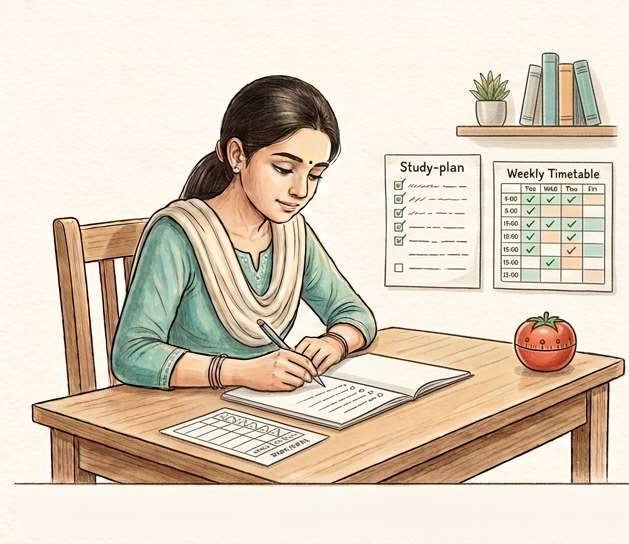

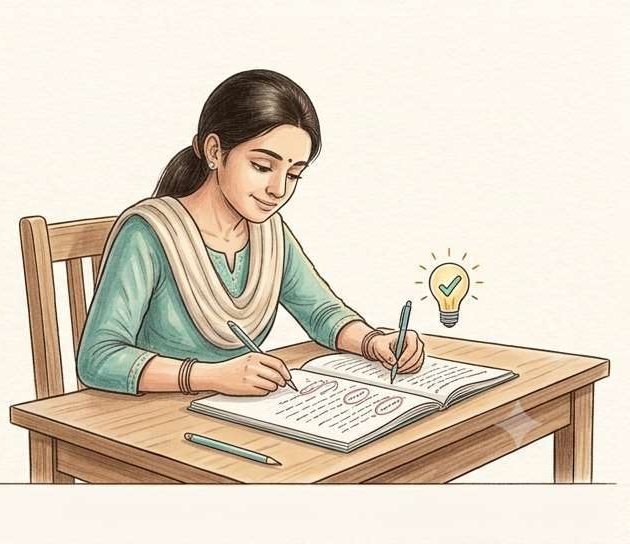
The learning process followed by most children today can be understood as existing on a spectrum between a black box and a grey box approach.
Children engage in learning without understanding how their brain, mind, body and emotions influence their learning process. Learning becomes largely trial-and-error, leading to inconsistent and unpredictable outcomes.
Children possess some intuitive awareness of what works for them — motivation, repetition or personal habits that seem effective. This can outperform the black box, but often requires far more time and effort, and lacks consistency.
In both cases, the absence of a structured understanding of how learning works limits the efficiency and effectiveness of the process. Developing this awareness is key to transforming learning into a more reliable, efficient and meaningful experience.
To meaningfully improve children's learning outcomes, it is important to recognize that both Teaching Assurance Systems and Learning Assurance Systems are required.
Educational institutions are designed with structured teaching systems that aim to deliver curriculum effectively at scale. However, learning itself is a deeply personal process that varies from one child to another. Expecting institutions alone to fully address individual learning needs may not always be practical.
At the same time, families are uniquely positioned to complement institutional efforts by supporting the child's learning process at a personalized level.
“What any person in the world can learn, almost all persons can learn if provided with appropriate prior and current conditions of learning.”— Benjamin S Bloom

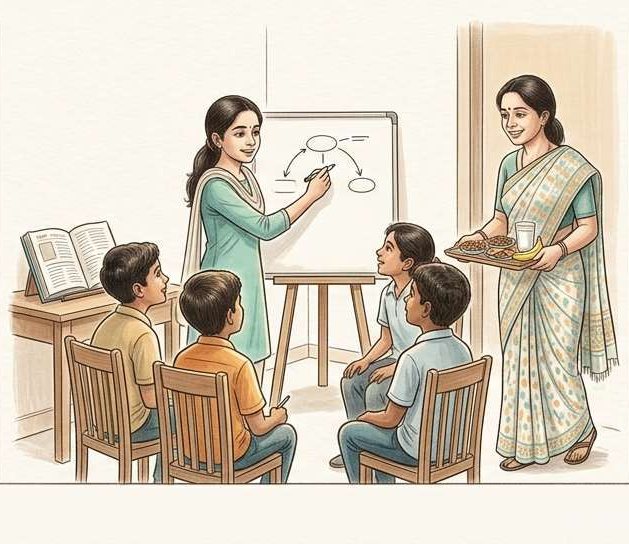
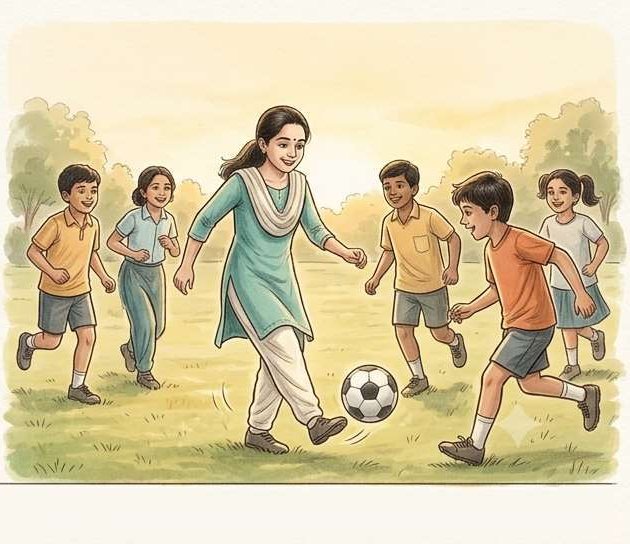
Learning is influenced by multiple interconnected factors beyond classroom instruction, including the availability of good learning resources and study schedules at home, attention, emotions, spaced retrieval practice, identifying gaps in understanding through self-testing and taking corrective action, integrating prior knowledge, solving problems in new and different contexts, fostering higher-order thinking skills, reciprocal teaching among peers, ensuring quality and quantity of sleep, relaxation, nutrition and daily lifestyle habits. While schools can guide and support, continuous influence in these areas is naturally embedded within the family environment.
Additionally, timely feedback plays a crucial role in effective learning. In school classroom settings, feedback cycles may be periodic. At home, however, parents can help children reflect on their learning more frequently, reducing the feedback latency to enable quicker course correction and deeper understanding.
Families can also support both direct and indirect learning efforts:
Given these factors, the role of the family is not to replace the school, but to complete the learning system by enabling consistent and personalized support.
“Home environment is the most important factor in determining the school achievement of the child.”— Benjamin S Bloom
The insights in this course are drawn from research findings often scattered across specialized publications in multiple disciplines — Pedagogy, Neuroscience, Psychology, Biology and Affective Science. These fields collectively help us understand how learning actually occurs.
Where a child's learning sits comes down to one thing: how clearly they can see the way their own learning works.
At the far end is the transparent glass box: the child and family can see clearly how learning actually works — how encoding, storage, retrieval and the use of knowledge fit together — and can act on that understanding deliberately. Learning stops being a matter of chance and becomes a reliable process, in which consistent inputs produce consistent results.
| Approach | Awareness of how learning works | How learning happens | Typical experience & outcome |
|---|---|---|---|
| Black box | None — the inner workings are hidden | Trial and error | Inconsistent results; effort does not reliably pay off; confusion and stress |
| Grey box | Partial and intuitive — a few things that seem to work | Motivation, repetition and personal habits | Better than the black box, but slow, effortful and still inconsistent |
| Glass box | Full and explicit — learning is understood, visible, measurable and assured | Deliberate use of how encoding, memory, retrieval and usage work together | Efficient, consistent mastery, with greater clarity, confidence and well-being |

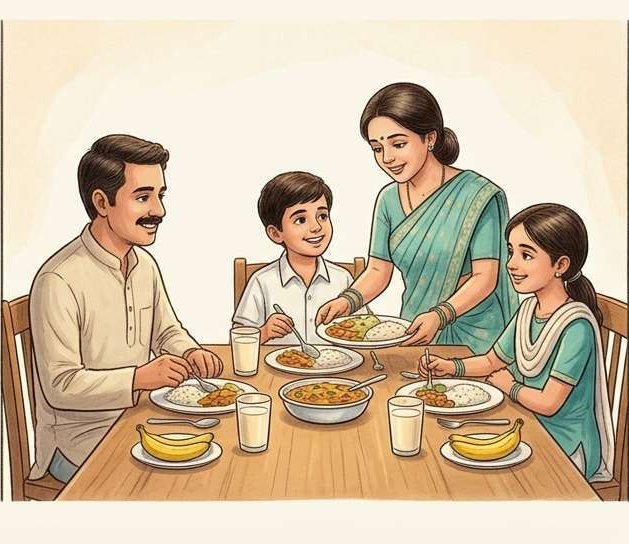

Lessons 07–12 climb all six levels of Bloom's taxonomy, from Remember to Create.
The value of the glass-box approach does not end with board exams. By becoming self-directed learners, children gain a tool they will keep using through college, university and lifelong learning.
“There are no faster or slower learners; there are only those who have the prerequisite knowledge and those who do not.”— Benjamin S Bloom
“Learning is not a race to collect information. It is the art of turning information into knowledge, knowledge into understanding and understanding into the power to apply, analyze and evaluate what we know – and finally, to create new knowledge and applications of our own.”
| Target audience |
|
|---|---|
| Course delivery | Online — 6 sessions of 2 hours each |
| Course duration | About 12 Hours* |
| Course fee | Rs. 2,000/-* per session for a family |
| Refund policy | Request a refund within 48 hours of attending a session, and 100% of that session's fee is refunded within a week. |
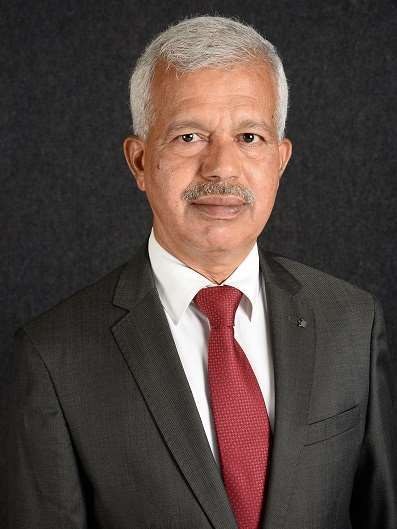
Teacher · Researcher · Academic Leader — 40+ years
Founder — New Gen Learner®, an Applied Research Institute focusing on:
Former Professor & Head, Mechanical Engineering
Thiagarajar College of Engineering,
Madurai, Tamil Nadu, India
Your payment today books Session 1. Later sessions are paid one at a time. 100% refund if requested within 48 hours of attending.
Secure payment on Razorpay. It takes about a minute.
🔒 Payments are processed by Razorpay.
